


What Is Sacrifice in Islam, and How Is It Defined?
As a religious term What is a sacrifice? The term refers to the specific types of animals slaughtered on the 10th, 11th, and 12th days of the month of Dhu al-Hijjah, as well as on the 11th and 12th nights of that month, with the intention of worship and drawing closer to Allah. At the heart of this act of worship lies submission to Allah’s command and the desire to draw closer to Him.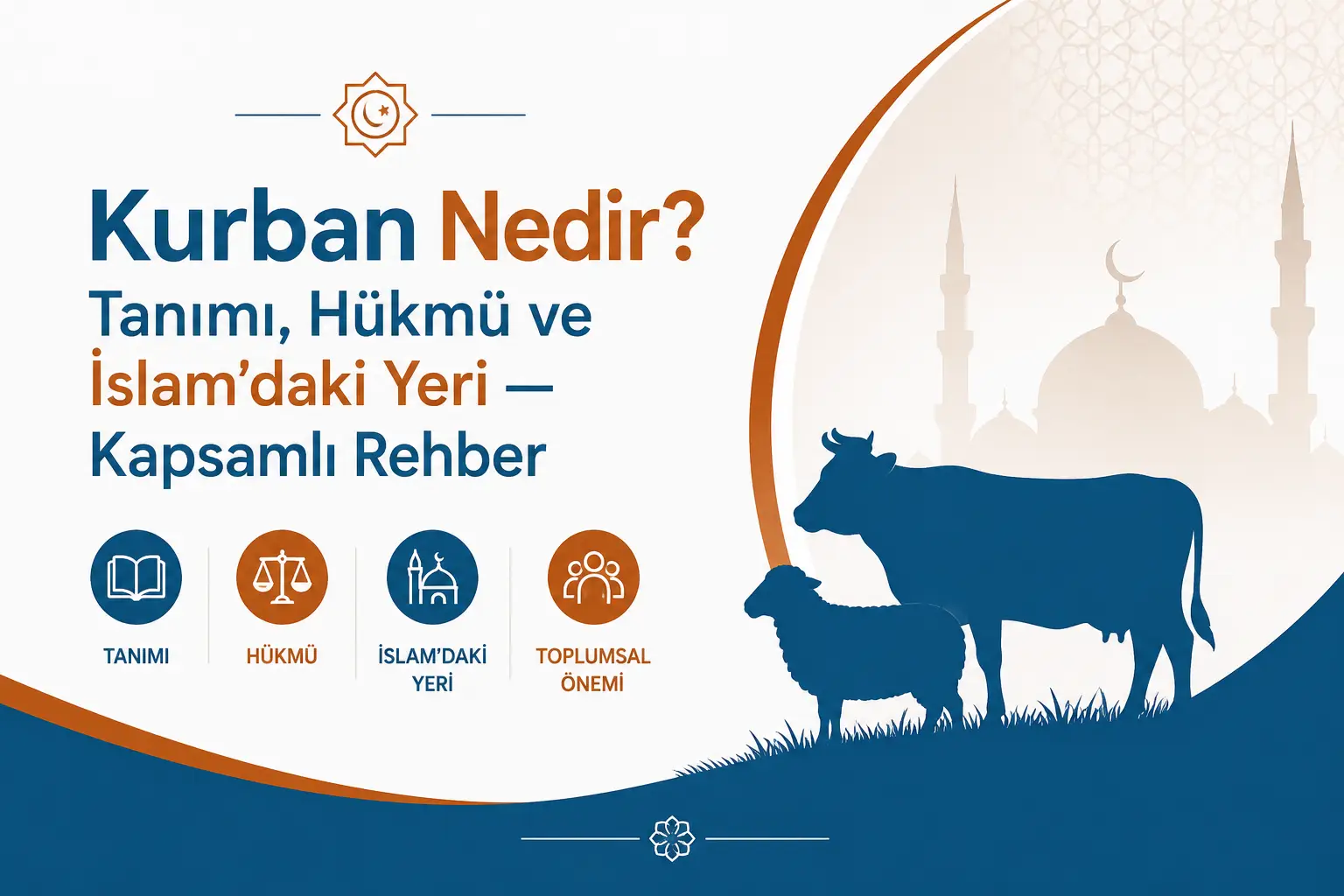
- Sheep and Goats: Must be at least one year old.
- Cattle and Buffalo (Câmûs): Must be at least two years old.
- Camel: It must be at least five years old.
The Ruling on Sacrifice: Is Sacrificing an Obligation?
According to Islamic law the ruling on the sacrifice It is obligatory. Every free and resident Muslim who possesses property worth the nisab amount, after meeting their essential and basic needs and settling their debts, must sacrifice an animal once a year. It has been stated that this act of worship is a religious obligation for every individual who is financially able to do so.The Spiritual Responsibility of Not Sacrificing an Animal
The Prophet (peace be upon him) issued serious warnings against those who fail to sacrifice an animal despite having the means to do so. In a hadith, the situation of those who have the means to sacrifice but fail to do so is described as follows:ArabicFurthermore, it has been warned that those who abandon this duty may be deprived of this great blessing on the Day of Judgment, as it is stated: “They will not receive our intercession.” This situation, Is the sacrifice obligatory? demonstrates just how important the answer to that question is.مَنْ وَجَدَ سَعَةً وَلَمْ يُضَحِّ فَلَا يَقْرَبَنَّ مُصَلَّانَا
Meaning“If anyone is able to offer a sacrifice but does not do so, that person should certainly not come near our mosque (that is, us).”
The Place and Significance of Sacrifice in Islam
The sacrifice has been prescribed to serve as a means of earning reward on the Day of Judgment, without distinction between the elderly, the young, men, and women. This act of worship is fulfilled only by slaughtering an animal that meets the criteria for sacrifice and allowing its blood to be shed. Paying the monetary equivalent as charity does not fulfill the obligation to perform the sacrifice within the prescribed time.Frequently Asked Questions
On which days is the sacrificial animal slaughtered?
The sacrifice may be performed from dawn on the tenth day of Dhu al-Hijjah until just before sunset on the twelfth day (the first, second, and third days of Eid al-Adha). It is not permissible to perform the sacrifice after sunset on the twelfth day.In cities—that is, in places where the conditions for Friday and Eid prayers are met—it is a requirement that the Eid prayer be performed before the sacrifice is made on the tenth day of Dhu al-Hijjah. In a place where the conditions for Friday and Eid prayers are not met, it is permissible to sacrifice the animal after dawn on the first day of Eid. In this matter, the location of the animal is considered, not the neighborhood where the owner resides. Sacrificing at night is disliked (makruh) due to the possibility of error in the darkness.
Who is required to perform the sacrifice?
It is obligatory for free, resident (non-traveling) Muslim men and women who are wealthy enough to be required to pay the fitrah charity (fitrah) to sacrifice an animal. It is not obligatory for a traveler (one who sets out on a journey of at least 90 km) to sacrifice an animal; however, it is permissible for them to do so as a voluntary act.The threshold for the sacrifice (nisab) is possessing 80.14 grams of gold or an equivalent amount of other property after deducting one’s basic and essential needs (such as a home, household items, a means of transportation, three sets of clothing, and one year’s worth of sustenance) and debts. Unlike the zakat threshold, this property does not need to be of a type that can increase through trade, nor does it require a full year to have passed since its acquisition.
Which animals are eligible for sacrifice, and what age must they be?
There are five types of animals designated for sacrifice: sheep, goats, cattle, water buffalo, and camels. These animals must have reached a certain age:
- Sheep and goats: one year old. (If a lamb is large enough to be indistinguishable from a one-year-old sheep, it may be sacrificed once it has reached six months of age.)
- Cattle and water buffalo: two years old.
- Camel: five years old.
Information Note: The İla Association provides information on the proper performance of the Qurbani ritual in accordance with Islamic jurisprudence and on social activities in this field. For more information, https://iladernegi.org/kurban/ You can visit the website.